Are We Allowed to Make a Happy Game Yet?
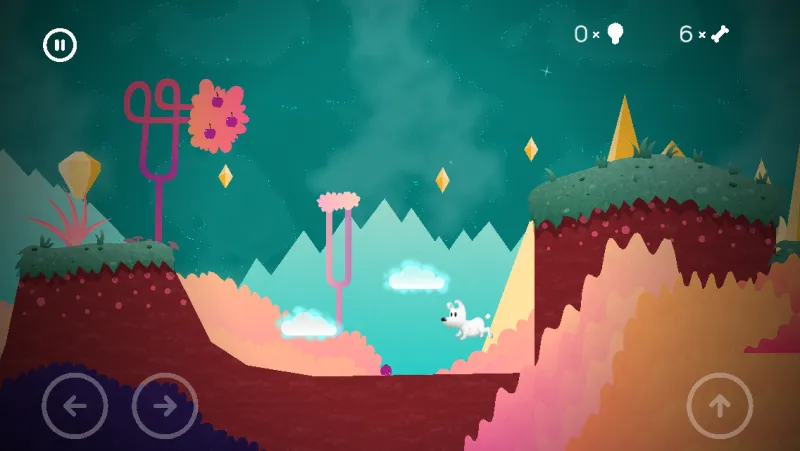
Photo: bright colorful indie video game art style joyful gameplay screenshot, via i.pinimg.com
Here's a game I've played many times: the one where the indie studio with three people and a dream releases something quietly devastating about loss, memory, or grief, and the internet collectively loses it. "I cried," we say, like it's a review score. "Ten out of ten, I wept."
I've loved a lot of those games. I've written about some of them. But lately I've been wondering something slightly heretical: when did sadness become the house style of emotional indie design — and is it starting to trap the very designers it was supposed to liberate?
The Sadness Premium
To be fair to the trend, it started as a correction. For decades, the mainstream industry treated emotion as a bonus feature — story was cutscenes between explosions, feelings were limited to an orphan's village burning down. Indie games blew that open. They proved a game could be about a dying parent, a dissolving marriage, the slow grief of a hometown fading. That was genuinely radical, and it mattered.
But somewhere along the way, the correction calcified into a formula. Melancholy piano? Check. Muted color palette? Check. A mechanic that's literally about letting go? Check. Somewhere in the last decade, "art game" became shorthand for "game that will ruin your evening," and reviewers — myself included — learned to treat tears as the highest form of praise.
That's a problem, and not just because it's predictable. It's a problem because it quietly teaches designers which feelings are serious. Grief gets grant funding and festival slots. Delight gets labeled "cozy" and filed under comfort content, as though making someone laugh or feel light is a lesser craft.
What We're Training Players to Expect
There's a player-side cost, too. Walk into the indie section of any showcase now and you can smell the sad ones coming. And when players know the sad game is going to be sad, the sadness arrives pre-installed. We cry on cue. That's not the same as being genuinely moved — it's closer to a conditioned response, an aesthetic we perform rather than an experience we undergo.
Meanwhile, the games that make us feel genuinely good — not comfy, but expansively, surprisingly alive — rarely get the same critical vocabulary. We have rich language for games about sorrow. For games about joy, we mostly have the word "wholesome," which is doing about a tenth of the work.
What the Next Wave Could Do
Here's what I want from the next generation of emotional indie design: games that treat joy, relief, and delight as structures, not garnish. Not a sad game with a nice ending — a game whose mechanics are built out of playfulness, reunion, relief after long tension, the specific electricity of being understood.
Imagine a game where the core loop is reconciliation. Where the difficulty curve is engineered around the feeling of a weight lifting. Where the most sought-after achievement isn't a tearjerker finale but a moment of unearned, ridiculous delight — and the design is precise enough to know exactly how to deliver it.
Some designers are already poking at this. Games built around cooking for people you love. Games about repairing things instead of destroying them. Multiplayer experiences whose whole point is the moment two strangers solve something together. These exist. They're just still treated as the dessert course rather than the main event.
Sadness Isn't the Enemy — Default Is
Let me be clear: I'm not asking for forced positivity or a ban on grief. Some of the best work in this medium will always be about pain, because pain is part of the human element and pretending otherwise would be its own kind of dishonesty.
What I'm arguing against is default. The idea that a game proves its artistic seriousness by making you miserable. That's just a new orthodoxy replacing an old one, and indie games were never supposed to have orthodoxies.
The most human thing about us isn't that we suffer. It's that we suffer and sing, sometimes in the same hour. Games that can hold both — that can make relief feel earned, that can make joy feel as weighty as loss — will be doing something the sadness formula can't.
So to the three-person studio with a dream: you're allowed to make the happy one. We'll cry at that too, if you build it right. Happy tears count.