You're Surrounded by Players and Still Completely Alone: The Hidden Loneliness of Modern Multiplayer
Photo: David Marcu davidmarcu, CC0, via Wikimedia Commons
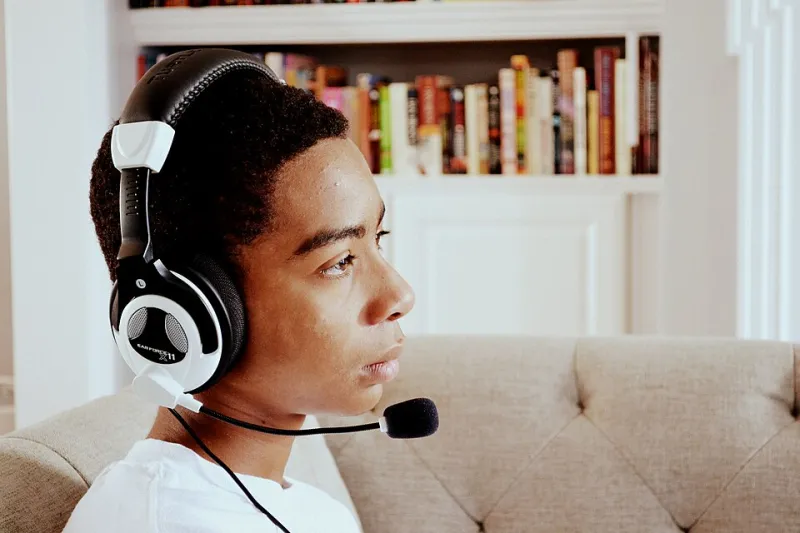
There's a specific kind of quiet that settles in after you close a match. Not the peaceful kind. The hollow kind — the kind that follows two hours of playing alongside strangers who never once acknowledged you were a person. You queued up. You played. You got flamed in chat. You closed the client. And somehow, despite technically spending your evening with other human beings, you feel more isolated than if you'd just watched TV by yourself.
This is the loneliness paradox of modern multiplayer gaming. And if you've felt it, you're not imagining things.
The Promise vs. The Reality
When online multiplayer went mainstream in the early 2000s — think late-night Halo 2 sessions over Xbox Live, the early days of World of Warcraft guilds built on genuine trust — there was a real sense that games were finally delivering on something profound. Connection. Belonging. The feeling that somewhere out there, people got you in a way your coworkers or classmates maybe didn't.
That promise hasn't entirely disappeared. But somewhere along the way, the dominant design philosophy of competitive multiplayer shifted. The goal stopped being play together and quietly became perform against each other. Leaderboards, ranked queues, KDA ratios, seasonal battle passes tied to individual achievement — the infrastructure of modern multiplayer is almost perfectly engineered to make you feel like a number in a system rather than a person in a community.
Dr. Pamela Rutledge, director of the Media Psychology Research Center, has written extensively about how social technology can paradoxically increase feelings of isolation when it substitutes performance metrics for genuine interaction. Gaming isn't exempt from that dynamic. In fact, competitive multiplayer might be one of its purest expressions.
When Toxicity Isn't the Problem — Design Is
It's tempting to blame toxic players for this feeling. And sure, the guy who spent thirty seconds calling you a slur after a bad round isn't helping. But toxicity is a symptom, not the root cause. The root cause is that most competitive multiplayer games aren't actually designed around human connection at all. They're designed around engagement loops — the psychological machinery that keeps you queuing up one more time.
Think about what information a typical competitive game gives you after a match. Your stats. Your rank change. Your performance relative to everyone else. Now think about what it rarely gives you: a moment to breathe, reflect, or actually talk to the people you just spent 45 minutes with. The design actively discourages the kind of slow, unstructured interaction where real connection happens.
Contrast that with what draws people to something like Stardew Valley's multiplayer mode, or It Takes Two, or even the collaborative chaos of Overcooked. These games — many of them indie productions built on comparatively tiny budgets — put shared experience at the center. Your success is literally inseparable from someone else's. You can't optimize your way to victory alone. You have to talk. You have to laugh when things go wrong. You have to be a person.
What Indie Developers Are Getting Right
When the team behind Chicory: A Colorful Tale designed their cooperative mode, the goal wasn't balance or competitive fairness. It was, in the words of the game's creative direction, about making players feel like they were genuinely creating something together. The coloring mechanic — messy, overlapping, impossible to "win" — forces collaboration through shared imperfection. Nobody's keeping score. That's the point.
Similarly, A Way Out — technically a mid-sized studio production, but spiritually indie in its ambitions — requires two players to be present at all times. Not as a gimmick. As a philosophical statement about what games could prioritize. Director Josef Fares has been pretty vocal about his belief that cooperative storytelling is an underexplored frontier, one that AAA publishers are too risk-averse to fully commit to.
Smaller developers have more freedom to take that risk. Without a shareholder expecting a battle pass revenue stream, an indie team can ask a genuinely different question: What if the game's entire purpose was just to make two people feel closer to each other?
The Players Who've Noticed
Spend any time in communities built around games like Journey, Spiritfarer, or Kind Words (a lo-fi game literally about writing supportive letters to strangers), and you'll find players describing experiences that sound almost nothing like typical multiplayer discourse. People talk about crying. About feeling seen. About logging off and actually calling a friend.
That contrast says something important. These games aren't more technically impressive than their AAA counterparts. They're not longer or more content-rich. What they offer is intentionality — design choices that treat the player's emotional state as something worth caring about, not just their engagement metrics.
One Journey player described the experience to us this way: "I've played games with randos for twenty years. That's the only time a stranger in a game has ever felt like a companion." The game doesn't have voice chat. It doesn't have usernames. You can't be toxic if you can't talk. And somehow, that silence communicates more than a thousand Discord servers.
What Connection Actually Requires
Here's the uncomfortable truth that competitive multiplayer design tends to avoid: real human connection is inefficient. It's slow. It's vulnerable. It doesn't optimize well. You can't A/B test your way to genuine belonging.
Indie games, often born from a single developer's need to process something real, tend to understand this intuitively. When Celeste developer Maddy Thorson built a game about climbing a mountain as a metaphor for mental health, the goal wasn't to make players feel accomplished — it was to make them feel understood. That's a fundamentally different design target. And it produces a fundamentally different experience.
The multiplayer spaces that feel most alive — the ones people remember years later — tend to share that quality. They're not optimized. They're human.
So Where Does That Leave Us?
None of this means competitive multiplayer is going away, or that it should. Plenty of people find real community in esports circles, in longtime friend groups running ranked queues together, in the shared language of a game they love. The problem isn't competition itself — it's the industry's near-total prioritization of competitive frameworks at the expense of everything else.
The indie space is quietly, stubbornly offering an alternative. Games designed not to keep you playing, but to give you something worth carrying with you after you stop. That's a harder thing to build. It's a harder thing to sell. But for players who've spent one too many evenings feeling hollow after a match, it might be exactly what they've been looking for.
The human element in gaming isn't a feature. It's the whole point. Some developers still remember that.