Your Body Is Not a Problem to Solve: Indie Games That Live Inside Physical Discomfort
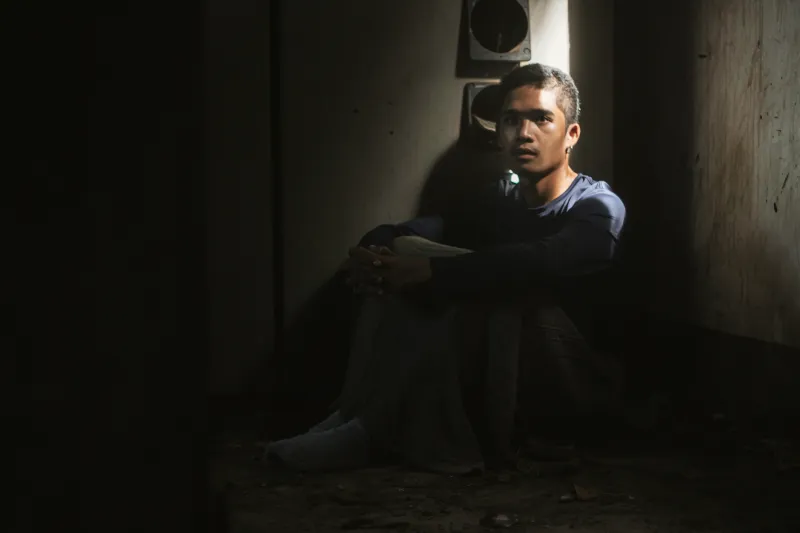
There's a version of every body-focused game you've already played a hundred times. You start weak. You grind. You get stronger, faster, more capable, more symmetrical. By the end, your character has basically transcended the inconvenience of having a physical form at all. The body becomes a trophy instead of a fact.
These games aren't that.
The ones we're talking about here don't offer a glow-up. They don't hand you a transformation arc. They put you inside a body — one that might be in pain, or visually "off," or simply incompatible with the world built around it — and they ask you to stay there. Not to fix it. Not to earn your way out of it. Just to exist in it, fully, without the promise of resolution.
That's harder than it sounds. And it turns out it's also one of the most honest things a game can do.
The Upgrade That Never Comes
When we talk about bodies in games, we usually mean stats. Hit points. Stamina bars. Maybe a weight slider in a character creator that you'll spend forty-five minutes on before starting the actual game. The body is a number. A resource. Something to optimize.
Indie games have been quietly chipping away at that assumption for years. And the ones doing the most interesting work are the ones that refuse to let you optimize your way out of discomfort.
Take Beasts of Maravilla Island as a softer example — a game that's gentle about what a young person's body can and can't do in rough terrain. Or push further into something like Hypnospace Outlaw, where the physical world barely exists but the ache of a specific kind of tired, hunched-over-a-screen-in-1999 existence bleeds through every pixel.
But the games that really commit to this are the ones that make you feel the body directly. Not as a metaphor. As a texture.
Slowness as a Statement
One of the quietest rebellions in indie game design is the refusal to make movement feel good. Most games — even bad ones — tune their controls so that basic locomotion has a little snap to it, a little momentum that flatters the player. Moving feels like flying, even when you're just walking.
Some games deliberately strip that away.
Getting Over It with Bennett Foddy is the obvious touchstone — a game explicitly designed to feel physically wrong, to make you fight your own hands, to humiliate your relationship with your own reflexes. Foddy narrates the whole thing with a kind of philosophical calm that only makes it worse. The body in that game is not your friend. It is a liability. And you are not going to fix it.
But there's something less punishing and more intimate happening in games like Celeste when it leans into Madeline's anxiety as a physical force — the way panic lives in the chest, not just the mind. The assist mode in that game, often dismissed by people who don't need it, is itself a statement: not everyone's body works the same way, and the game is willing to acknowledge that without making it shameful.
When Disability Isn't the Plot
Here's where a lot of games get it wrong: they make disability the story. The character is disabled, overcomes it, inspires everyone. Or they're disabled, can't overcome it, and that's the tragedy. Either way, the disability is the narrative engine. It exists to be resolved or mourned.
A smaller number of indie games do something more radical — they let disabled or physically impaired characters just be people. The condition is present. It shapes things. But it isn't the lesson.
A Short Hike comes close to this in its peripheral characters — figures whose physical limitations are just part of who they are, woven into conversation without fanfare. Butterfly Soup handles bodies with a kind of matter-of-fact warmth that bigger productions rarely manage. The characters are aware of themselves physically, awkwardly, honestly, but the game doesn't pause to explain that awareness to you.
There's a whole conversation happening in the indie space right now about who gets to make these games and who gets to be in them. Developers with chronic illness, with disabilities, with bodies that mainstream culture has always treated as problems — they're making games that feel different from the inside out. Not because they're checking a box, but because they know what it actually feels like to live somewhere that wasn't built for you.
The Aesthetic of Not Being Fixed
Visual design matters here too. There's a certain kind of indie art style — lumpy, asymmetrical, deliberately un-polished — that carries its own argument about bodies. When a character looks weird and soft and a little off-model, and the game treats them with complete sincerity, something quietly important happens.
You stop waiting for them to look better. You just accept them as they are. And then, if the game is doing its job, you start accepting yourself in the same breath.
Elsinore does this with its character designs — figures that look human without being idealized, that move through their world with the kind of weight that comes from actually existing in a body. Hylics goes further into the deliberately grotesque, making flesh itself feel strange and funny and maybe sacred. These aren't mistakes in the art direction. They're arguments.
The argument is: this is what it looks like when you stop apologizing for what bodies actually are.
Why This Matters Right Now
We're living through a pretty intense cultural moment around bodies. Every app, every algorithm, every filter is optimizing human appearance toward some imaginary ideal. The pressure to look fixed — to look like you've been corrected — is constant and loud and exhausting.
Games mostly make that worse. The default protagonist is built like a Greek statue. The female characters are designed to a specification. Even in games that try to offer variety, the options are usually variations on the same basic theme of physical competence and visual appeal.
So when an indie game comes along and just... doesn't do that... it can feel almost shocking. Not because it's trying to make a political statement (though sometimes it is), but because the absence of that constant corrective pressure is so noticeable.
Your character can be round. Can move slowly. Can hurt. Can look like something you've never seen in a game before. And the game doesn't flinch. Doesn't apologize. Doesn't promise you it'll get better.
That's not nihilism. That's something closer to respect.
Staying in the Uncomfortable
The games that stick with you longest from this category aren't the ones that make you feel bad about bodies. They're the ones that make you feel real about them. There's a difference.
Feeling bad is what happens when a game uses physical imperfection as a punishment or a pity device. Feeling real is what happens when a game trusts you to sit with complexity — to recognize something true about the experience of being physical, mortal, imperfect, and still here.
That trust is rare. Most entertainment is too nervous to offer it. The constant pressure to resolve, to fix, to uplift — it's everywhere, and it usually wins.
But the indie games doing this work are holding the line. They're saying: you don't have to earn your body back. You don't have to fix it to deserve a story. You can just be in it.
And honestly? After years of playing characters who transcend their physical limits in the final act, that's a kind of ending I didn't know I needed.