Designed to Fall Apart: The Indie Games That Make Losing the Most Honest Thing You'll Ever Do
There's a contract most games make with you the moment you press start. It goes something like this: try hard enough, learn the patterns, stay persistent, and eventually you'll get there. The credits will roll. The hero wins. You close the laptop feeling like the whole thing added up to something.
It's a comforting structure. It's also, if you've spent any real time being alive in America, not always how things go.
A handful of indie developers have started making games that break that contract on purpose — not out of cruelty, but out of something closer to honesty. These aren't games where failure means you need to try again. They're games where failure is the ending. Where the story was always going to end this way, and the whole experience is about sitting with that, turning it over, and figuring out what it means.
Playing them feels uncomfortable in a way that's hard to shake. And that discomfort, it turns out, is exactly the point.
The Lie at the Heart of Most Game Design
Western game design has a deeply ingrained bias toward resolution. Even games that call themselves dark — that give you morally complicated choices or tragic NPCs — tend to funnel you toward a final moment where your agency meant something. You made it. You survived. The arc bends toward triumph.
This isn't accidental. It's cultural. American storytelling, across almost every medium, runs on the engine of individual perseverance. Work hard, adapt, overcome. The underdog story. The comeback arc. Even our tragedies usually involve a protagonist who almost made it, which still centers their agency as the thing that mattered most.
But that framing quietly excludes a huge swath of actual human experience. The job you lost that you did everything right to keep. The relationship that ended not because anyone was villainous but because the timing was wrong and neither of you could fix that. The version of yourself you worked so hard to become and then just... didn't. Not every story has a lesson. Not every effort lands.
Some indie games are starting to say that out loud.
When Losing Is Designed In, Not Patched Out
Games like Disco Elysium flirt with this idea — your character is already broken before the game begins, and certain endings feel less like victories than like managed survival. But there are smaller, stranger games that go further.
Pathologic 2 is the most famous example in this space. It is, by almost any conventional metric, a game you cannot win. The town is dying. You cannot save everyone. You will run out of time, resources, and goodwill before the final day arrives. The game doesn't apologize for this. It watches you scramble and exhaust yourself and make impossible choices, and then it asks you, quietly but directly: Did you really think you could fix this?
That question lands differently than a game over screen. It doesn't feel like a challenge to do better next time. It feels like a reckoning.
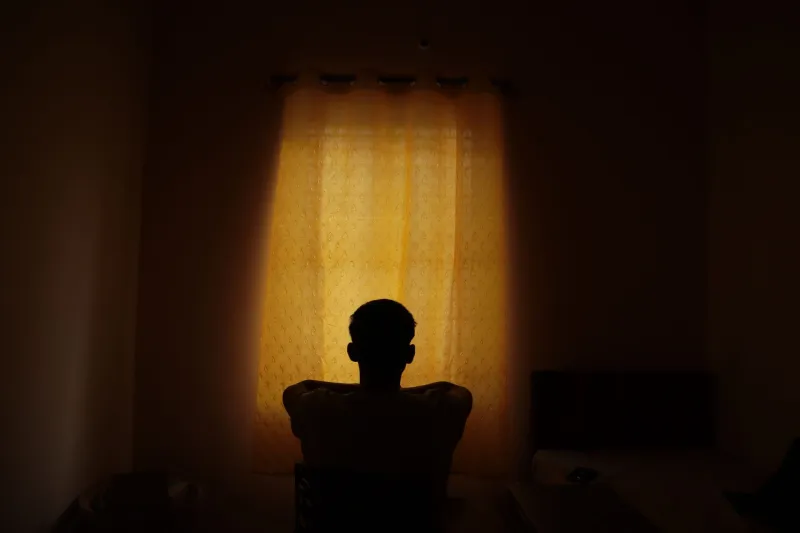
Actual Sunlight takes a different approach — quieter, more domestic, more American in its specific flavor of despair. You play a man in his thirties, overweight, lonely, stuck in a job that's slowly draining him. There are no mechanics that let you turn things around. The game isn't asking you to find the right dialogue option or the right routine. It's asking you to witness. By the end, you've sat with someone whose life did not improve, and the game doesn't flinch from that. It just lets it be true.
What Catharsis Actually Means Here
Here's the thing that's easy to miss: these games don't feel hopeless to play. Or at least, they don't feel only hopeless.
There's a specific kind of relief that comes from a story that doesn't force meaning onto your suffering. If you've ever been through something genuinely hard — a grief that didn't resolve, a failure that didn't teach you anything useful, a period of your life that just kind of ended without closure — you know how exhausting it is to have people keep asking what you learned from it. What you're taking forward. How you're growing.
Sometimes the honest answer is: I'm not. It just happened, and now it's over, and I'm still here.
Games designed around failure give you a space to feel that without being corrected. The game isn't going to reward you for spinning it into a lesson. It's just going to let the thing be what it was.
That's not nihilism. That's actually a form of respect.
The Difference Between Punishing and Honest
It's worth drawing a line here, because not every brutally hard game belongs in this conversation. Dark Souls is famously punishing, but its whole philosophy is that you can overcome — you just have to earn it. The failure there is a teaching tool. It's in service of eventual mastery.
What we're talking about is different. These are games where the difficulty isn't a gate between you and the win. The difficulty is the experience. You're not meant to get better at them in a way that changes the outcome. You're meant to feel the weight of a situation that doesn't bend to your will no matter how hard you push.
That design choice requires a lot of trust between developer and player. You're essentially asking someone to spend time with you on something that won't pay off in the conventional sense. A lot of players will bounce off that immediately — and that's fair. But for the players who stay, something real tends to happen.
Why This Matters Right Now
We're living in a moment where the gap between effort and outcome feels unusually wide for a lot of people. You can do everything right — work hard, stay informed, try to be a decent person — and still find yourself losing ground. Economically, socially, personally. The promise that perseverance leads to success feels shakier than it used to.
Indie games that design failure into their DNA aren't just being artistically daring. They're making something that reflects the actual texture of a lot of people's lives right now. They're saying: we see you. We're not going to make you perform optimism to earn a good ending.
That's not a small thing.
Playing Something That Tells the Truth
The games in this space aren't for everyone, and they're not trying to be. They're for the players who have felt the particular loneliness of a story that didn't resolve, who have sat with something that didn't get better, who are a little tired of being handed a win they didn't earn just so the credits can roll.
For those players, a game that lets you lose — really lose, not as a step toward winning but as the final honest word — can feel like exhaling after holding your breath for a very long time.
Some things don't work out. Some stories end in collapse. And there's something quietly radical about a game that looks you in the eye, acknowledges that, and says: yeah. That's real. You can feel that here.
That's what the human element in these games actually is. Not the triumph. The truth.