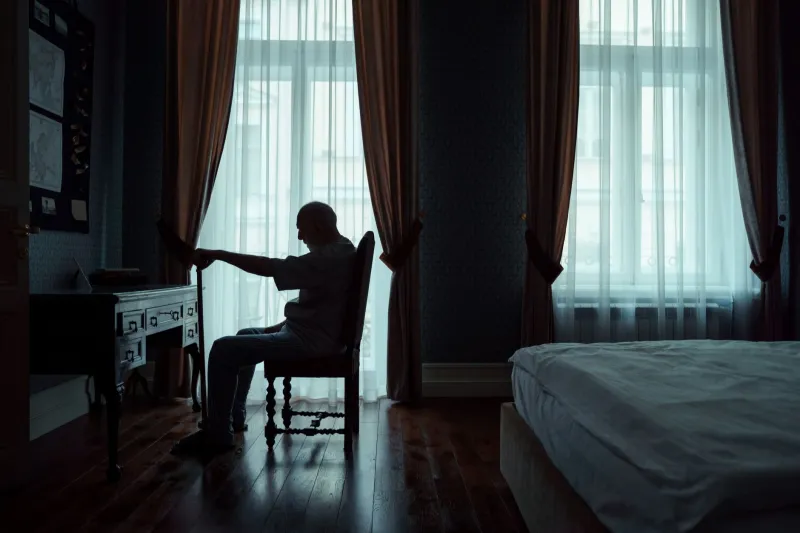
Softer Than You Deserve: The Indie Games That Teach You to Stop Punishing Yourself

Here's a thing that doesn't get said enough: forgiving other people is often easier than forgiving yourself. We have scripts for that. Apologies, reconciliation, the slow rebuilding of trust. But turning that same compassion inward — sitting with the version of you that messed up, hurt someone, made the wrong call, or just failed to be who you wanted to be — that's a different kind of work entirely. Harder. Quieter. More stubborn.
A handful of indie games have figured out that this is exactly the kind of emotional territory worth exploring. Not through grand redemption arcs where the protagonist earns their peace by completing some external quest. But through something smaller and more honest — the act of witnessing yourself clearly, without flinching, and choosing something gentler than punishment.
The Shame Spiral Is a Familiar Place
If you've spent any time in your own head after a regret, you know the loop. You replay the moment. You edit it. You wonder what you were thinking. You decide you should have known better. Then you decide the fact that you didn't know better says something permanent and damning about who you are. And then you start the loop again.
What makes certain indie games so unexpectedly useful here is that they externalize that loop. They put it on a screen. They give it a character, a setting, a mechanic. And once something is outside of you — once you can see the shape of it — it becomes a little easier to examine without drowning in it.
Celeste is the most famous example of this, and it earns every mention it gets. Madeline's climb isn't just a platforming challenge; it's a sustained conversation with the part of herself that tells her she's not enough, that she shouldn't even try, that her anxiety is proof of some fundamental deficiency. The game never resolves that tension by eliminating it. It resolves it by showing Madeline — and by extension, you — that the critical voice inside isn't an enemy to be defeated. It's a part of you that also deserves some care. That reframe is deceptively simple and genuinely hard to sit with.
When the Mirror Doesn't Lie
Night in the Woods takes a different approach. Mae Borowski comes home from college having dropped out, having hurt her friends, having made choices she can't fully explain even to herself. The game doesn't offer her a clean arc. It offers her autumn in a small town, some weird supernatural business, and the slow, uncomfortable process of showing back up for the people she let down — including herself.
What makes Mae's story land so specifically is that she's not seeking absolution. She's not performing remorse for an audience. She's just... trying to figure out how to live inside her own skin after she's made it harder to do so. A lot of players, particularly those who've wrestled with depression or felt like they fell behind some invisible schedule everyone else is keeping, recognize that particular flavor of stuck. The game doesn't fix it. It just keeps you company in it.
That companionship is doing something real. It's saying: you're not the only one who's been here. And that's sometimes the first thing you need to hear before you can be gentler with yourself.
The Mechanics of Self-Compassion
Some games build self-forgiveness directly into how they play.
Spiritfarer gives you a management game built around saying goodbye. You're ferrying spirits to whatever comes next, and almost all of them carry something unresolved — grief, guilt, things they wish they'd said or done differently. But the game's central warmth comes from Stella, your character, who meets each of them with patience and presence rather than judgment. Playing as someone who offers that kind of unconditional care — over and over, across dozens of hours — has a way of making you wonder if you've ever offered it to yourself.
There's something almost sneaky about that. You're not being lectured. You're not reading a self-help prompt. You're just playing, and somewhere in the middle of building a farm on a boat and hugging a sad old bear, you start to feel what it might be like to extend that same gentleness inward.
What Remains of Edith Finch works differently but toward similar ends. Walking through a house full of family stories — many of them tragic, some of them strange, all of them human — you're confronted with the ways people carry their histories, the weight of inherited patterns, the things that get passed down whether you want them or not. It doesn't ask you to forgive yourself directly. It just shows you, quietly, that everyone is doing their best inside circumstances they didn't fully choose. That's a softer truth than it sounds.
The Part Nobody Talks About
Here's the honest thing about self-forgiveness that these games understand: it's not a destination. You don't arrive at it and stay. You practice it. You have a good day with yourself and then a bad one. You extend yourself grace and then you don't. You go back to the loop.
Disco Elysium might be the most radical example of a game that holds this reality without blinking. Harry Du Bois has done genuinely terrible things. He is a mess, objectively and dramatically. And the game gives you the option, over and over, to look at that honestly — to understand how he got here, to see the person underneath the wreckage — without either excusing the damage or using it to permanently define him. The political ideology you choose, the skills you develop, the conversations you have: all of it is a negotiation between who Harry has been and who he might still become. The game doesn't promise resolution. It promises presence. It stays with him. That's the offer.
Why This Matters in a Game
You could make the argument that a therapist, a journal, or a good conversation with a friend serves this purpose better than any game. And maybe that's true. But games offer something those things don't: a controlled distance. A character who is and isn't you. A world where you can sit with hard feelings without the stakes of real consequences pressing in from every side.
That distance isn't avoidance. Used well, it's a practice space. A place to rehearse what it might feel like to witness your own worst moments with something other than contempt. To make peace with the person in the save file — the one who made the call you're still second-guessing, who said the thing you can't take back, who just wasn't who they needed to be at the time.
The games that do this well aren't offering easy comfort. They're not telling you that you didn't mess up, or that it doesn't matter, or that you've suffered enough so you're off the hook now. They're doing something harder. They're sitting with you in the discomfort and making the case, slowly and without pressure, that you might deserve the same patience you'd give to anyone else.
That's not a small thing. For a lot of players, it turns out to be exactly what they needed to hear — even if they didn't know they were looking for it.