Stuck and Still Here: The Indie Games That Let You Be Dull, Flawed, and Completely Human
Every game has an arc. You start weak, you get stronger, you learn something, you change. The credits roll and the person holding the controller is supposed to feel — if not transformed — at least nudged. Games love a redemption curve. They love the moment where a character finally understands themselves, makes the right call, earns the ending they deserve.
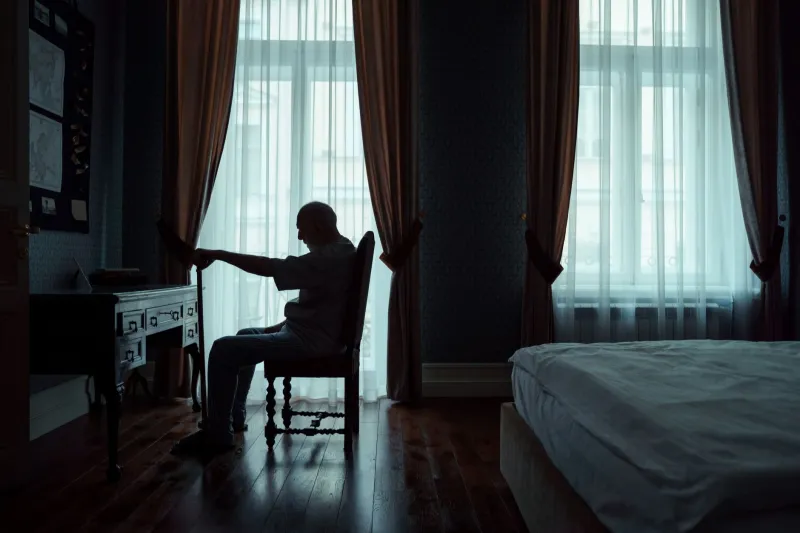
But what about the people who don't do that? What about the ones who stay kind of stuck? The ones who know their patterns, recognize their worst tendencies, and still repeat them anyway? The ones who aren't particularly interesting, don't have a dramatic backstory, and aren't building toward anything?
A small, stubborn corner of indie games has decided those people are worth playing too.
The Myth of the Necessary Arc
We've been trained to expect transformation. Even games that position themselves as emotionally realistic tend to wrap things up with at least a little growth — a letter written, a relationship repaired, a moment of clarity in the rain. The arc doesn't have to be triumphant, but it usually has to be something. Change is the proof that the story mattered.
But that's not always how people work. Some folks stay in the same apartment for twelve years not because it's a choice but because moving takes energy they don't have. Some people apologize for the same thing over and over, genuinely meaning it every time, and still doing it again the following Thursday. Some people are, by most measurable standards, pretty boring — and also quietly falling apart in ways they can't quite name.
Indie games are starting to let that be the whole story. Not the setup. Not the before-picture. The whole thing.
What Stagnation Actually Feels Like
Disco Elysium gets a lot of credit for many things, but one thing that doesn't get talked about enough is how deeply it commits to letting its protagonist be a genuine disaster without requiring him to stop being one. You can play the entire game as a man who learns nothing useful, doubles down on every bad instinct, alienates everyone around him, and still technically solves the case. The "resolution" is almost beside the point. The game is interested in the texture of a person who is broken in ways that predate the plot and will outlast it.
There's something almost radical about that. Most games that feature a messy protagonist use the mess as fuel for eventual clarity. Disco Elysium treats the mess as the character. He isn't working toward wholeness. He's just... in it.
Actual Sunlight goes even further, stripping away genre and momentum almost entirely. You play a man living a life that many people in the US would quietly recognize — overweight, underemployed, lonely in a city that doesn't notice him, filling evenings with food and games and the specific heaviness of time that won't move. The game doesn't redeem him. It doesn't punish him either. It just shows you what a day looks like, and then another one, and lets you sit inside that without a payoff waiting at the end.
It's uncomfortable. It's supposed to be.
Boring Is a Feeling Too
There's a particular kind of game that indie developers have gotten good at making — call it the life-sim of low expectations. Unpacking hints at this, though it leans more tender than bleak. A Short Hike gestures at it. But the games that really sit inside ordinariness without romanticizing it are harder to find and harder to stay with.
Cibele is one of them. It's a game about a young woman playing an online game and falling for someone through it. There's no villain. There's no lesson, exactly. She's not particularly remarkable. She makes choices that feel small and real and slightly embarrassing to watch. The intimacy of it comes not from drama but from specificity — the cluttered desktop, the voice memos, the way she talks about herself with a mix of self-awareness and self-delusion that feels almost too familiar.
You don't walk away from Cibele thinking about her arc. You walk away thinking about how much of your own life you recognized in something you expected to feel nothing about.
The Flaw That Doesn't Resolve
Here's the thing about flawed characters in most games: the flaw is a puzzle. It exists to be solved, overcome, or at minimum, understood in a way that makes it easier to carry. Games give you the tools. You do the work. The flaw becomes a feature of your growth story.
The indie games worth talking about here don't do that. The flaw is just... a flaw. It stays. The character knows it's there. Maybe they mention it. Maybe they're tired of it. And then the day continues and nothing changes.
Paratopic has this quality — its characters move through a world that feels low-grade wrong, making choices that seem bad in slow motion, and the game doesn't intervene. There's no moment where someone gets it together. The atmosphere is saturated with the feeling of people who are not okay and are not becoming okay and are going to keep going regardless.
Conversations We Have in My Head operates in a similar register. It's a short, text-based experience about the difference between what you say and what you meant to say — the gap between the person you are in your own mind and the one who actually shows up to the conversation. Nobody wins. Nobody grows. The ending isn't an ending so much as a pause.
Why It Matters to Play This Way
There's a version of this article that makes a grand claim about representation — that seeing yourself in a game means something, that players who live unremarkable lives deserve protagonists who look like them. That's true, and it's worth saying. But there's something else happening in these games that goes beyond visibility.
Playing a character who doesn't transform gives you permission to stop performing transformation for a minute. So much of the cultural noise around self-improvement — the productivity content, the wellness industry, the general American pressure to be optimizing something at all times — assumes that stagnation is failure. These games quietly disagree. They say: a person who isn't growing right now is still a person. Still worth following. Still worth caring about.
That's not a small thing to feel inside a video game. That's actually kind of everything.
The human element in these experiences isn't the drama or the stakes or the earned catharsis. It's the recognition. The moment where you look at this flat, flawed, unremarkable character and think: yeah, I know someone like that. Or more honestly: yeah, that's me on a Tuesday.
And somehow, that's enough.