Fear Doesn't Have to Be a Boss Fight: What Indie Horror Gets Right About Being Terrified
There's a version of horror games that's basically an action movie with the lights off. You're scared, sure, but you're also armed, skilled, and moving toward an endpoint where the monster dies and you don't. Fear becomes a spice — something to make the victory taste better. You're never really powerless. The game just wants you to feel like you are.
Then there's another kind.
The indie horror space has quietly been building something different for years now. Games that don't give you a win condition. Games that don't resolve the dread. Games that sit you down inside a feeling and say, okay, now what? Not because they're trying to traumatize you, but because they understand something that bigger studios seem allergic to admitting: fear, real fear, is about exposure. It's about being seen by something that doesn't care about you. And that's not a mechanic. That's a human experience.
The Jump Scare Is a Cheat Code
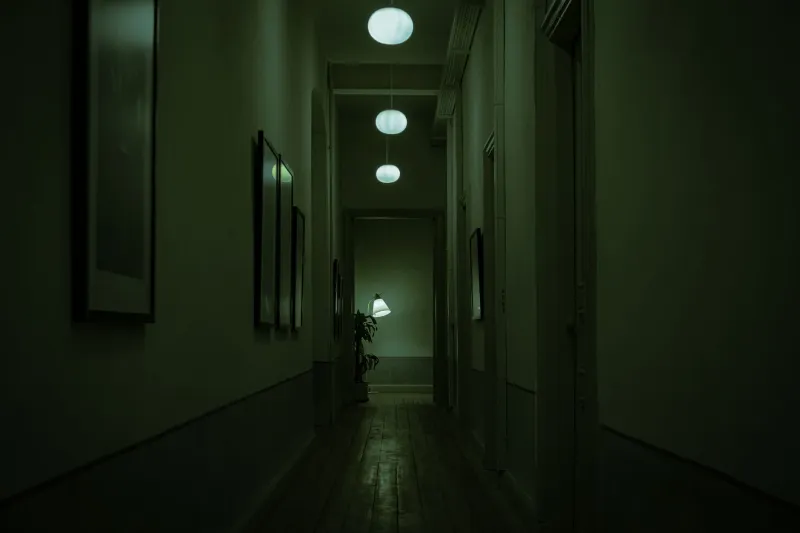
Let's get this out of the way. Jump scares work. They're effective in the same way a car alarm is effective — sudden, loud, impossible to ignore. But they don't linger. Nobody lies awake at 2 a.m. thinking about the moment something screamed at them from behind a door. They lie awake thinking about the hallway before the door. The silence. The not-knowing.
Indie developers figured this out partly by necessity. You can't out-budget Resident Evil. You can't hire the motion capture team or the sound design department with a staff of forty. What you can do is understand psychology well enough to build something that gets under the skin without a single scripted scare sequence.
Games like Dread Templar or Amnesia: The Dark Descent — even though the latter came from a small team before Frictional scaled up — understood that helplessness is scarier than any monster design. When you can't fight back, the game stops being about skill. It becomes about endurance. About staying present inside discomfort. That's a completely different ask.
Sitting With It Instead of Solving It
One of the things indie horror does that mainstream titles rarely attempt is refusing to let you fix the fear. In a standard horror game, the narrative arc is essentially therapeutic: identify the threat, understand the threat, destroy the threat, feel better. The structure promises resolution. You entered scared; you leave victorious.
But grief doesn't work like that. Anxiety doesn't work like that. Trauma doesn't work like that. And the indie games that take horror seriously — titles like Soma, Cry of Fear, Paratopic, or the devastating Ib — understand that some things don't get resolved by the time the credits roll. The fear isn't a puzzle. It's a condition.
Paratopic, for instance, barely explains itself. It drops you into a fractured, low-poly world and lets dread accumulate through atmosphere and implication rather than event. Nothing jumps at you. Nothing chases you through a corridor. But the wrongness is everywhere, and you can't escape it because there's no mechanism for escape. That's not a design flaw. That's the whole point.
When a game asks you to stay in a terrifying space without offering you a way out, it's doing something quietly radical: it's treating your fear as valid rather than as an obstacle.
Vulnerability Is the Mechanic
Here's what the best indie horror games understand that most big-budget titles don't: vulnerability isn't just a feeling the game creates in you. It's the actual gameplay. The exposure is the interaction.
Take Lone Survivor, the side-scrolling psychological horror game from Jasper Byrne. On the surface it looks like a survival game — you manage food, sleep, sanity. But the real experience is about a person coming apart in isolation, and the choices you make don't feel like strategy. They feel like coping. Do you eat the suspicious food because you're desperate? Do you talk to the hallucinations because silence is worse? The game makes you feel the weight of those decisions not because they're mechanically complex but because they mirror something real about what people do when they're scared and alone.
That mirroring is where indie horror becomes something more than entertainment. It becomes a space to practice being afraid without actual stakes. To notice what you do when you feel exposed. To recognize that the instinct to run, to close your eyes, to pretend the threat isn't real — those aren't just gameplay responses. They're yours.
When the Horror Is You
Some of the most affecting indie horror games eventually point the lens inward. The external threat turns out to be a projection. The monster is a metaphor. The house is a memory.
This is territory that games like Among the Sleep — where you play as a toddler navigating what turns out to be a home shaped by alcoholism and neglect — explore with more emotional precision than most dramatic films. The horror isn't supernatural. It's the specific terror of being small and dependent in an environment that isn't safe. Players have written at length about how that game cracked something open in them they weren't expecting. That's not an accident. That's craft.
Or consider Devotion, the Taiwanese horror game from Red Candle Games, which embeds its scares inside a portrait of a family unraveling under pressure — religious obsession, parental desperation, the specific grief of watching someone you love disappear into something you don't understand. The horror in that game is inseparable from the love story at its center. You're not scared of a monster. You're scared of loss. Of failure. Of being the reason something went wrong.
That's not adrenaline. That's recognition.
Why This Matters Outside the Game
There's a reason people seek out horror in the first place. Not just for the rush — though that's real — but because fear, experienced safely, is a kind of practice. It's a way of touching something hard without being destroyed by it. Therapy sometimes works the same way: controlled exposure, the gradual building of tolerance, the discovery that the feeling won't actually kill you.
Indie horror games, at their best, function like that. They don't promise you'll win. They don't tell you the fear will go away. They just sit next to you in the dark and say: this is what scared feels like, and you can feel it without disappearing.
That's not a small thing. In a culture that treats fear as something to overcome, to conquer, to monetize into a thrill — a game that lets you simply be afraid, without judgment, without a win condition, without a shotgun — that's genuinely countercultural.
And it's more honest about what fear actually is than anything with a $200 million budget has managed to pull off.
Maybe that's the real horror: that the indie games were telling the truth the whole time, and we just kept looking for the boss fight.