The Dishes Are Not a Minigame: Indie Games That Put Care Work Front and Center
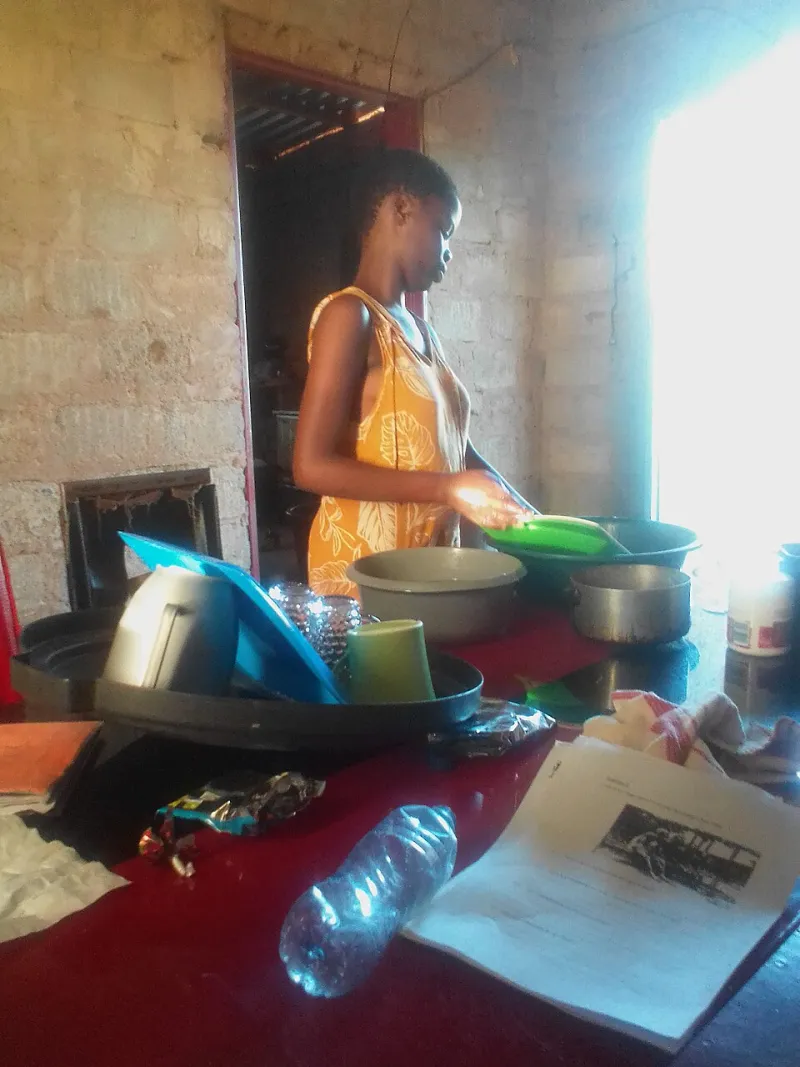
Photo: Malvin nzondo . S, CC BY-SA 4.0, via Wikimedia Commons
Somebody in your house cleaned the bathroom this week. You probably didn't notice, and that's the whole problem.
Care work is the labor that keeps a life running and vanishes the moment it's done. It doesn't get a health bar. It doesn't get a boss fight. And for most of gaming history it hasn't gotten a mechanic, either — cooking is a buff, cleaning is a chore minigame you skip, and listening to someone's problems is dialogue you click through on the way to the part where you hit something.
A run of indie games has decided that the boring part is the part worth building a game around. Not as a gimmick. As an argument.
The Part of the Job Nobody Puts on the Box
Think about how care appears in a typical AAA game. There's a crafting menu. There's an NPC who needs medicine, and you have medicine, so you press a button and the quest completes. The emotional weight is real, but the labor is abstracted away. You never scrub the pot.
Indies keep putting the pot back. They make you stir, wait, wash, listen, stay. And in doing so they reveal how much of being a person is spent on work that nobody thanks you for.
Spiritfarer: The Hug Is the Mechanic
Thunder Lotus' ferry game looks, at first glance, like a management sim. You build rooms, grow crops, cook meals, sail between islands. But every system funnels into one verb: taking care of someone who is dying.
The spirits on your boat have needs, and the needs are mundane — a favorite food, a room that feels like home, a conversation at the right moment. The game's central action is a hug, and it's not decorative. It's the payoff for attention.
What Spiritfarer nails is the exhaustion of caregiving alongside its tenderness. You are constantly behind. There's always something to cook, someone to talk to, a hug you owe. That's not a design flaw. That's the most honest thing the game does.
Venba: A Recipe Is an Apology With Instructions
Visai Games' short, gorgeous story about a Tamil mother and her son uses cooking as its entire language. You restore a damaged recipe book, and the ingredients are partly missing, and you fill in the gaps the way memory fills in gaps — imperfectly, with guesses that feel right.
The food she makes is love, and it's also expectation, and it's also the thing that goes unthanked for twenty years. When her son finally understands what those meals cost her, it doesn't arrive as a cutscene. It arrives as a kitchen. That's a smarter move than any monologue.
This War of Mine and the Arithmetic of Care
11 bit studios' civilian survival game is brutal for a lot of reasons, but the one that stays with me is how it turns caretaking into math. Someone is sick. Someone is hungry. You have one night, one backpack, and a ruined city. Do you scavenge or do you sit with the person who can't be left alone?
The game makes care expensive, and then makes you choose anyway, and then lets the choices compound on the faces of the people in the shelter. It's one of the few games where bandaging a wound feels as dramatic as a firefight — because it costs the same things.
A Mortician's Tale, Cart Life, and the Labor Without a Cutscene
A Mortician's Tale is a game about paperwork and bodies. You embalm, you dress, you fill out forms, you handle grieving families with a couple of dialogue options. There's no combat, no puzzle, no fail state that matters. Just the slow, dignified work of caring for the dead and the living who loved them.
Cart Life is even less glamorous. You run a food cart. You set up, you sell, you miss your daughter's recital because the lunch rush doesn't care about your custody schedule. The game is famously tedious, and the tedium is the statement. This is what labor feels like when nobody's watching.
Who Ends Up Holding the Sponge
The uncomfortable question underneath all of this: these games are about care, but who is expected to care in real life? Statistically, in the US and pretty much everywhere, it's women — the emotional labor of remembering birthdays, the physical labor of the kitchen, the unpaid work of aging parents. And it's disproportionately women of color, and it's disproportionately poor families who can't buy their way out of it.
That context is why making care playable matters. When you spend an hour of your evening cooking a meal for a spirit who will forget it, or matching ingredients in a recipe book you can't fully read, you're not just playing a cozy game. You're being asked to notice the amount of a human life that disappears into maintenance.
Why Care Beats Combat
I'm not arguing that fighting games are dishonest. I am arguing that a medium obsessed with systems has mostly ignored the system that raised it.
Care work is mechanics. It's prioritization, resource management, timing, patience, and the willingness to do the same small thing again tomorrow. It has stakes as high as anything in a shooter. It just doesn't get a trailer.
The games above give it one. Play them, and then go thank whoever does the dishes in your house. They've been carrying a stat screen you never opened.