Loading Screen for the Soul: The Players Using Indie Games to Heal From Things That Actually Happened
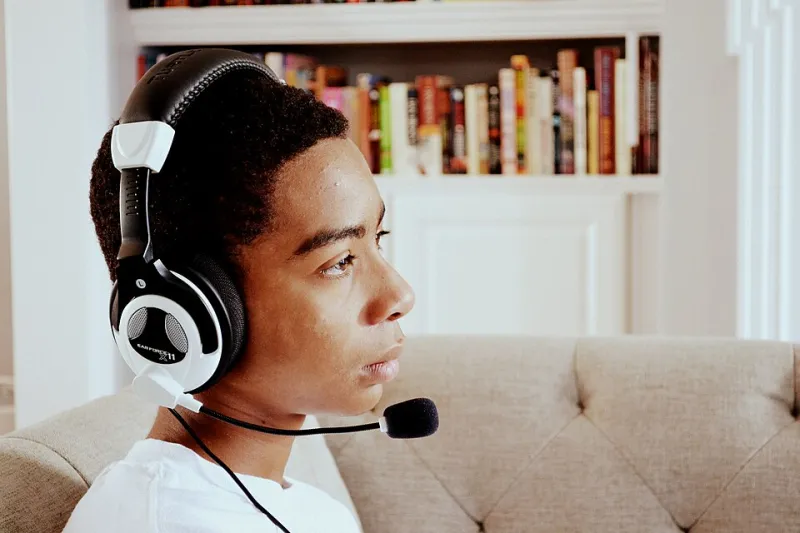
Photo: LE Morgan, CC BY-SA 2.0, via Wikimedia Commons
I want to be careful here, because this topic deserves care.
This isn't a piece arguing that video games cure depression or that you should swap your therapist for a Steam library. Mental health is serious, access to care in this country is genuinely difficult, and oversimplifying any of this does real harm.
But something is happening at the intersection of indie games and emotional recovery that's worth talking about honestly. Players are finding their way through grief, anxiety, and life-altering transitions inside games that were designed — sometimes deliberately, sometimes instinctively — to hold space for exactly that kind of weight.
That's worth looking at directly.
The Gap That Games Are Filling
Therapy in the US is expensive, often inaccessible, and for many people still carries a stigma that makes the first step feel enormous. The average wait time to see a mental health professional can stretch into months. And even for people who do have access, therapy happens in fifty-minute windows, once a week if you're lucky.
Life doesn't schedule itself around those windows.
Games are available at two in the morning when the anxiety spikes. They're there on the Sunday afternoon when the grief gets loud again. They don't require insurance, a referral, or the emotional energy of explaining yourself to a stranger. For a lot of people — especially younger adults who grew up with games as a primary cultural language — they've become a first-response tool for emotional survival.
The question isn't whether that's happening. It clearly is. The question is what kinds of games actually help, and why.
What Players Say Changed Something
The testimonies cluster around a handful of titles with striking consistency.
Celeste comes up constantly among people navigating anxiety and depression. Not because it offers solutions, but because it names the experience without flinching. Madeline's relationship with her own mind — the part of her that undermines, catastrophizes, and tells her she can't — resonated with players who had spent years being told their internal experience was invisible. Seeing it rendered in a game, treated with seriousness and even tenderness, did something. People describe crying during the Reflection chapter not because it was sad in a conventional way, but because it was accurate.
Spiritfarer appears in nearly every conversation about grief. Players who had recently lost parents, siblings, partners, or friends describe the game's farewell sequences as some of the most emotionally honest representations of loss they'd encountered — more useful to them than some forms of grief counseling, they said, because it didn't try to fix anything. It just sat with them in the hard part.
Gris gets mentioned by people processing trauma that's hard to articulate. The game communicates through color and movement and absence rather than words, which turned out to be useful for experiences that language hadn't been adequate to describe.
These aren't outliers. Spend any time in communities built around these games and the pattern repeats.
What Mental Health Professionals Are Noticing
Clinicians who work with younger patients are increasingly aware that games are part of their clients' emotional lives in ways that can't be ignored. Some therapists — particularly those who practice narrative or expressive therapy — have started incorporating game experiences into sessions the way they might reference books, films, or music.
The therapeutic concept of externalization — the idea that separating a problem from a person's identity can make it easier to examine — maps onto certain games in interesting ways. When you play as a character who is struggling with something you recognize, you get a kind of distance from it. You can observe the experience, make choices within it, and sometimes find language for things you couldn't name before.
This isn't the same as therapy. Clinicians are clear about that. But it can be a useful on-ramp. Players who found Celeste or Spiritfarer meaningful sometimes describe those experiences as the thing that made them realize they needed — and were ready for — actual support. The game didn't treat them. It helped them see themselves clearly enough to seek treatment.
What Developers Are Learning
The creators of these games don't always set out to make therapeutic tools. But many of them are making games about their own experiences — their own anxiety, their own grief, their own moments of falling apart and slowly reassembling — and they've been watching what happens when those experiences land with players.
Maddy Thorson, who has spoken openly about the personal dimensions of Celeste and the game's connection to her own mental health journey, has described receiving messages from players for whom the game was genuinely significant in their recovery. That feedback has shaped how she thinks about what games can do.
Thunder Lotus, working on Spiritfarer, ran the game's emotional beats by people who had experienced loss. They wanted the grief to be right — not cinematic grief, but the specific, irregular, sometimes funny and sometimes devastating texture of actual mourning. The result was a game that grieving players recognized as real.
That recognition is doing something. When an experience validates what you've been through — especially an experience that felt isolating or unspeakable — it reduces shame, and shame is one of the primary barriers to healing.
The Limits of This, and Why They Matter
There are real risks in leaning too hard on this framing.
Games can also be avoidance. Immersion can become dissociation. For someone in genuine crisis, a game is not a substitute for human connection or professional care. And the games industry, for all the genuine good work happening in this space, is still a commercial enterprise that can exploit the language of mental health for marketing purposes without doing the actual work.
The difference between a game that genuinely engages with emotional difficulty and one that simply aestheticizes it matters. Gris and Celeste earned their reputations by being rigorously honest. Not every game that claims emotional depth delivers it.
Players are generally pretty good at knowing the difference. The games they return to, the ones they describe with that particular quietness, tend to be the ones that didn't look away.
What This Means for How We Talk About Games
We're still catching up to what games actually are in people's lives. The cultural conversation often swings between dismissing them as entertainment and overclaiming them as revolutionary art. The reality is more specific and more human than either position.
For some people, in some moments, a particular indie game was the thing that helped them get through a particular night. Or name a particular feeling. Or decide to make a call they'd been putting off.
That's not nothing. That's actually quite a lot.
The human element in these games isn't a feature. It's the whole point.